

Vitamin D3 K2 Supplement: The Complete Expert Buying Guide
Most people know they need vitamin D, yet far fewer know the full story. Far fewer know why vitamin K2 needs to come with it. Together, they form one of the most important pairs in nutrition — and choosing the right Vitamin D3 K2 supplement can make a real difference to your bone health, heart health, and immune system.
This guide, therefore, covers every key factor. From dosage and purity to carrier oils and price, you will find everything you need to make a smart, informed choice.
What Is a Vitamin D3 K2 Supplement — and Why Does the Combination Matter?
Vitamin D3 helps your body absorb calcium from food. That sounds straightforward. The problem is that calcium needs to go to the right place — your bones — not your arteries.
This is where K2 comes in. Vitamin K2 activates two key proteins. One sends calcium into bones. The other keeps it out of blood vessel walls. Without enough K2, high D3 intake can actually raise the risk of calcium buildup in the arteries.
As a result, taking D3 without K2 is like filling a car with fuel but forgetting to steer. A good Vitamin D3 K2 supplement gives you both — so calcium does its job safely.
1. Vitamin D3 Dosage: What to Look for in a D3 K2 Supplement
Above all, dosage is the first number to check on any D3 K2 label. Consequently, get this wrong and the product will either underdeliver or push you past safe limits.
Most products offer between 1,000 IU and 10,000 IU of D3 per serving. The right dose for you, however, depends on…” (already has “however”
General dosage guidelines:
| Goal | Suggested D3 Dose |
|---|---|
| Maintenance (good sun exposure) | 1,000–2,000 IU |
| General health (limited sun) | 2,000–4,000 IU |
| Correcting deficiency | 4,000–10,000 IU |
| Therapeutic (doctor supervised) | 10,000 IU+ |
The best approach, therefore, is to test your blood levels first. A simple 25(OH)D test tells you exactly where you stand. Without that data, 2,000–4,000 IU daily is a safe and well-studied starting range for most adults.
Always check the serving size as well. Some brands pack 5,000 IU into one softgel. Others split the same dose across two or three capsules. So The math must be clear before you commit.
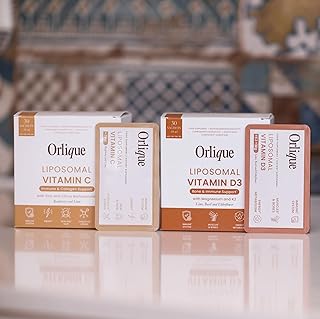
Immune Support, Bone Health, Collagen & Energy | High Bioavailability Liquid Supplements | Vegan | 60 Sachets.
2. Vitamin K2 Dosage and Form in a D3 K2 Supplement
Not all K2 is the same. The form of K2 in your Vitamin D3 K2 supplement matters just as much as the dose.
In practice, there are two main forms of K2:
MK-4 is a short-acting form, for instance. It clears the body quickly — within hours. As a result, it requires multiple doses per day to stay effective. Some studies use very high doses of MK-4 (45mg daily), which is far above what most supplements provide.
MK-7, by contrast, is the superior choice for daily supplement use. It stays active in the body for over 24 hours, so a single daily dose is enough. Furthermore, it is more effective at activating the proteins that direct calcium to bones — making it the better option for most people.
Look for a product that provides 90–200 mcg of MK-7 per serving. Anything below 45 mcg is unlikely to produce a meaningful effect. Meanwhile, anything above 200 mcg offers little extra benefit for most people.
3. The D3 to K2 Ratio: Getting the Balance Right
indeed The balance between D3 and K2 is one of the most overlooked details in any D3 K2 product. Yet it directly affects both safety and results.
There is no single perfect ratio, however. However, a widely used and well-tolerated guideline is:
- 1,000 IU of D3 for every 100 mcg of K2 (MK-7)
So a product with 5,000 IU of D3 should ideally pair it with at least 500 mcg of K2. In reality, many products underdose K2 while maximizing D3. This is a problem, because the more D3 you take, the more K2 you need to safely direct the calcium it mobilizes.
Always check both numbers on the label. Ultimately, A high D3 dose paired with a token 45 mcg of K2 is not a balanced product — it is a marketing decision dressed up as nutrition science.
4. Source and Purity of Ingredients in a Vitamin D3 K2 Supplement
Where your supplement gets its ingredients from, in fact, tells you a great deal about its quality.
Vitamin D3 sources:
- Lanolin-derived D3 is the most common source. Specifically, It comes from sheep wool fat. This is effective, affordable, and well-studied. However, it is not suitable for vegans.
- Lichen-based D3 is the vegan alternative. Instead, It is plant-derived, equally potent, and growing in availability. If you follow a plant-based diet, always confirm the D3 source on the label.
Vitamin K2 sources:
- Fermented K2 (from natto) is the natural form. Natto is a fermented soybean food, and it is one of the richest natural sources of MK-7. Fermented K2 is well-absorbed and backed by strong research.
- Synthetic K2 is made in a lab. However, It is cheaper to produce but less studied than fermented forms. Some synthetic K2 products contain a mix of MK-7 forms (cis and trans). Only the all-trans MK-7 form is biologically active. Check that the label specifies all-trans MK-7.
In the end, a clean source combined with minimal processing is a strong signal of a quality product.
5. Carrier Oil and Absorption: Why It Matters in a D3 K2 Supplement
This is one detail that many buyers overlook — and it matters, in fact, more than most people think.
D3 and K2 are both fat-soluble vitamins, which means fat must be present for them to absorb. This means your body can only absorb them properly when fat is present. Without fat, A dry tablet or capsule with no oil delivers far less D3 and K2 to your bloodstream than a softgel packed in a quality carrier oil.
Common carrier oils and what to look for:
- Olive oil — a top choice. It is rich in healthy fats, well-absorbed, and widely used in premium products.
- MCT oil (from coconut) — fast-absorbing. It is a good option, especially for people on low-carb or keto diets.
- Avocado oil — a premium choice with a clean fatty acid profile and good stability.
- Sunflower oil — acceptable, though less ideal. Some products use refined sunflower oil, which adds little nutritional value.
- Soybean oil — common in budget products. Unfortunately, It is not ideal due to its high omega-6 content and GMO concerns.
Avoid any Vitamin D3 K2 supplement that uses a dry tablet format without added fat, unless you plan to take it with a fatty meal every single time.
6. Form and Delivery Method for a Vitamin D3 K2 Supplement
Vitamin D3 K2 supplements come in several formats, and each one has clear strengths. Each one has real strengths and trade-offs.
Softgels, overall, are the gold standard. They come pre-filled with oil, which means fat-soluble absorption is built in. Most third-party-tested, high-quality D3 K2 products come in softgel form.
Capsules can work well if they contain an oil blend inside. A dry capsule without oil, however, is far less effective for fat-soluble vitamins.
Liquid drops, similarly, offer flexible dosing and fast absorption. They are ideal for children, elderly users, or anyone who dislikes swallowing pills. The oil is already present in the formula.
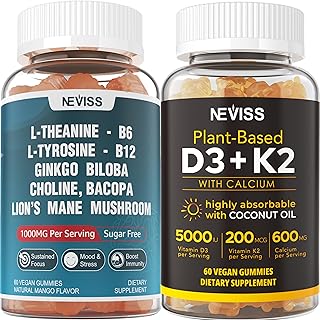
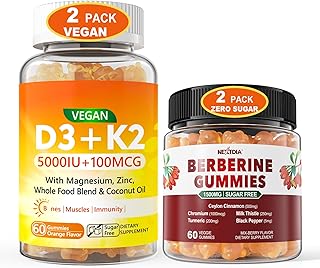
Gummies are appealing but rarely optimal. Typically, They tend to use lower doses, added sugars, and less stable forms of both vitamins. In addition, they often contain gelatin, which rules them out for vegans.
Tablets, on the other hand, are the least ideal format for D3 and K2. Without oil, absorption is limited. For this reason, Choose a softgel or oil-based capsule whenever possible.
7. Ingredient Transparency and Label Cleanliness
A trustworthy D3 K2 product should have a label you can read and trust in seconds. If the ingredient list raises questions, the product probably should too — that is a clear signal to walk away.
Red flags to watch for:
- Titanium dioxide — a synthetic whitener linked to health concerns in some studies. There is no reason for it to be in a quality supplement.
- Artificial colors or flavors — unnecessary in a supplement and a sign of a low-quality formula.
- Proprietary blends — when the label hides individual doses behind a blend name, you cannot verify whether the D3 or K2 amounts are effective.
- Excessive fillers — a small amount of cellulose or rice flour as a capsule filler is normal. A long list of binders, coatings, and additives is not.
In short, the best products have short, clean labels. Specifically, Every ingredient is listed with its exact amount. Most importantly, Nothing is hidden.
8. Third-Party Testing and Certifications for a D3 K2 Supplement
The supplement industry is not tightly regulated. As a result, third-party testing is one of the most important checks you can run.
Certifications that carry real weight:
| Certification | What It Confirms |
|---|---|
| USP Verified | Potency, purity, and dissolve time confirmed |
| NSF Certified for Sport | No banned substances; label claims verified |
| Informed Sport | Batch-tested; trusted by professional athletes |
| COA (Certificate of Analysis) | Lab results for potency and contaminant screening |
At minimum, always look for a published COA from an outside lab. Generally, Trusted brands post these on their website or share them on request. In that case, If a brand will not provide a COA, that alone is reason enough to look elsewhere.
9. Synergistic Co-Factors to Pair with Your D3 K2 Supplement
A well-designed supplement does not stop at D3 and K2. Several other nutrients work closely with these vitamins and can boost their effect.
Magnesium is, above all, the most important co-factor. Without enough magnesium, your body cannot properly convert vitamin D into its active form. Many people are deficient in magnesium without knowing it. As a result, adding magnesium — either in the supplement or separately — often makes a noticeable difference to how well D3 works.
Boron, similarly, supports bone health and may help the body use vitamin D more effectively. It is a useful addition in bone-focused formulas.
Zinc works alongside vitamin D in immune function. It is a sensible addition, especially in products aimed at immune support.
Vitamin A has a close relationship with vitamin D3. Both vitamins share the same receptors in the body. In fact, A small amount of vitamin A alongside D3 can help balance their effects. however Too much vitamin A, however, can block D3 activity. The dose, therefore, matters.
Overall, Look for products that include these co-factors at sensible doses — not megadoses that push into unsafe territory.
10. Dietary Suitability: Choosing a Vitamin D3 K2 Supplement for Your Needs
The right product must fit your diet and values. Indeed, This is not just a preference — for some people, it is a health or ethical requirement.
Before buying, therefore, confirm the product meets your needs:
- Vegan — the D3 must come from lichen, not lanolin. The capsule must use plant cellulose, not gelatin. K2 should come from fermented sources, not animal-derived MK-4.
- Gluten-free — must be made in a certified gluten-free facility. Even so, A “gluten-free” label on a product made in a shared facility carries real cross-contamination risk.
- Non-GMO — look for Non-GMO Project Verified certification, not just a self-declared label.
- Halal — requires certified halal processing and no animal-derived gelatin or lanolin.
- Kosher — requires a recognized kosher authority to certify the product, not a self-declaration.
- Allergen-free — soy is a common hidden allergen in K2 supplements derived from natto. If you have a soy allergy, look for a soy-free K2 source.
Always read the full ingredient list — it is the only reliable check. The “Other Ingredients” section is where hidden additives and allergens appear.
11. Intended Benefits and Use Cases
The benefits of a good Vitamin D3 K2 supplement are broad — but they are not all equally supported by research. Knowing what the science actually says, therefore, helps you set real expectations.
Well-supported by clinical research:
- Bone density — D3 improves calcium absorption. K2 directs that calcium into bone tissue. Together, they are one of the best-studied combinations for bone health.
- Cardiovascular safety — K2 activates the protein that stops calcium from building up in artery walls. This is especially relevant for people taking high-dose D3.
- Immune function — D3 plays a key role in immune regulation. In particular, Studies consistently show links between low D3 levels and higher rates of infection.
- Mood and mental health — low vitamin D is closely linked to low mood and seasonal depression in multiple studies. As a result
Moderately supported:
- Testosterone support — some studies show a link between vitamin D levels and testosterone in men, though results vary.
- Athletic recovery — D3 may support muscle function and reduce injury risk, though research is still building.
Less well-evidenced:
- Cancer prevention — early studies are promising but not yet strong enough to make firm claims.
- Cognitive decline prevention — Still, interesting research exists but needs more trials before firm conclusions can be drawn.
In the end, credible brands are open about what the evidence does and does not support. Be cautious about products that claim to do everything.
12. Price per Serving
Pricing for a Vitamin D3 K2 supplement ranges from under $0.10 to over $1.50 per serving. The bottle price alone, however, tells you very little about real value.
The metric that matters is cost per IU of D3 and cost per mcg of K2.
How to calculate it:
- Multiply servings per container by the D3 IU per serving — this gives total IU in the bottle
- Divide the price by that total for cost per IU
- Run the same calculation for K2 mcg
For example, a $25 bottle with 90 softgels of 5,000 IU D3 and 100 mcg K2 is a very different value from a $30 bottle with 30 softgels of 1,000 IU D3 and 45 mcg K2. The first product is far more cost-effective — even though it costs more upfront.
Premium products using lichen-based D3, MK-7 K2, and quality carrier oils will, of course, cost more. In many cases,That premium is often worth it. However, always run the numbers to confirm you are paying for quality — not just packaging.
13. Brand Reputation and Manufacturing Standards
With hundreds of brands on the market, reputation and production standards are key filters for any purchase.
GMP certification (Good Manufacturing Practices) is, first and foremost, the non-negotiable baseline. GMP facilities follow FDA rules for cleanliness, equipment, and batch quality. Therefore, Any brand worth buying should manufacture in a GMP facility and state this clearly.
Beyond GMP, look for:
- Company history — brands with 5–10+ years in the market have a track record you can check
- Open sourcing — companies that name their ingredient sources (e.g. Quali-D® for D3, MenaQ7® for K2) signal real accountability
- Third-party audits — regular outside audits of the facility go beyond what GMP requires and reflect a higher commitment to quality
- Responsive customer service — access to real COAs, a clear return policy, and direct contact options all reflect operational trust
Be especially careful with new brands that rely heavily on social media but publish no test data. Ultimately,Good branding is not a substitute for proven quality.
How to Choose the Right Vitamin D3 K2 Supplement — A 5-Step Framework
Choosing the right product, fortunately, does not need to be complicated. there These five steps make the process simple and clear.
Step 1 — Test your vitamin D level first. A 25(OH)D blood test is cheap and widely available. however Your result tells you exactly what dose you need. This step alone, in fact, saves you from both underdosing and overdosing.
Step 2 — Choose MK-7, not MK-4. MK-7 stays active in the body all day. ineed A single daily dose is enough. Always check the label for MK-7 specifically.
Step 3 — Check the ratio. For every 1,000 IU of D3, therefore, you want at least 100 mcg of K2 (MK-7). If the K2 dose is low, the product is simply not properly balanced.
Step 4 — Pick a softgel or oil-based format. After all, fat is required for D3 and K2 to absorb properly. A softgel with olive oil, MCT oil, or avocado oil, for instance, gives you built-in absorption. A dry tablet does not.
Step 5 — Verify third-party testing. Look for a USP, NSF, or Informed Sport stamp — or ask for the COA directly. No test data means no accountability.
Frequently Asked Questions About Vitamin D3 K2 Supplements
Why do I need K2 with my D3?
D3 raises calcium levels in your blood. K2 tells that calcium where to go — into your bones, not your artery walls. Without enough K2, high D3 intake may raise the risk of arterial calcium buildup. A good Vitamin D3 K2 supplement combines both so calcium does its job safely. From there,
What is the best form of K2 in a supplement?
MK-7 is the best form for daily use. It stays active in the body for over 24 hours, so one dose per day is effective. MK-4 clears the body within hours and needs multiple daily doses to work. Look for all-trans MK-7 on the label for the most active and stable form.
How much vitamin D3 should I take daily?
This depends on your blood levels. Without a test, 2,000–4,000 IU per day is a safe starting range for most adults. If a test shows you are deficient, a doctor may recommend 5,000–10,000 IU temporarily. Always retest after 3 months to check your levels.
Can I take a Vitamin D3 K2 supplement with food?
Yes — and it is strongly recommended. D3 and K2 are fat-soluble, so taking them with a meal that contains fat boosts uptake. If your supplement comes in a softgel with carrier oil, fat is already included. Even so, taking it with food generally improves how well both vitamins are absorbed.
Is a vegan Vitamin D3 K2 supplement as effective as a standard one?
Yes. Lichen-based D3 and fermented MK-7 K2 perform just as well as lanolin-derived D3 and animal-sourced K2 in studies. The key is to verify both the D3 and K2 sources on the label — and to confirm the capsule uses plant cellulose rather than gelatin.
What is the difference between MK-4 and MK-7?
Both are forms of vitamin K2, but they behave differently. MK-4 is short-acting and clears the body in hours. MK-7 is long-acting and stays effective for over a day. For a daily Vitamin D3 K2 supplement, MK-7 is the smarter and more practical choice. however ,
Final Verdict
A Vitamin D3 K2 supplement is one of the most well-studied and widely recommended combinations in modern nutrition. The gap between a well-made product and a poorly made one, however, is large.
Start with the dose — matched to your actual blood levels. Confirm MK-7 as the K2 form. Check the D3-to-K2 ratio. yep Choose a softgel with quality carrier oil. Look for third-party testing. Run the cost-per-serving calculation before comparing prices.
Done with care, this process leads you to a product that supports your bones, protects your arteries, and strengthens your immune system — all from a single daily capsule.