
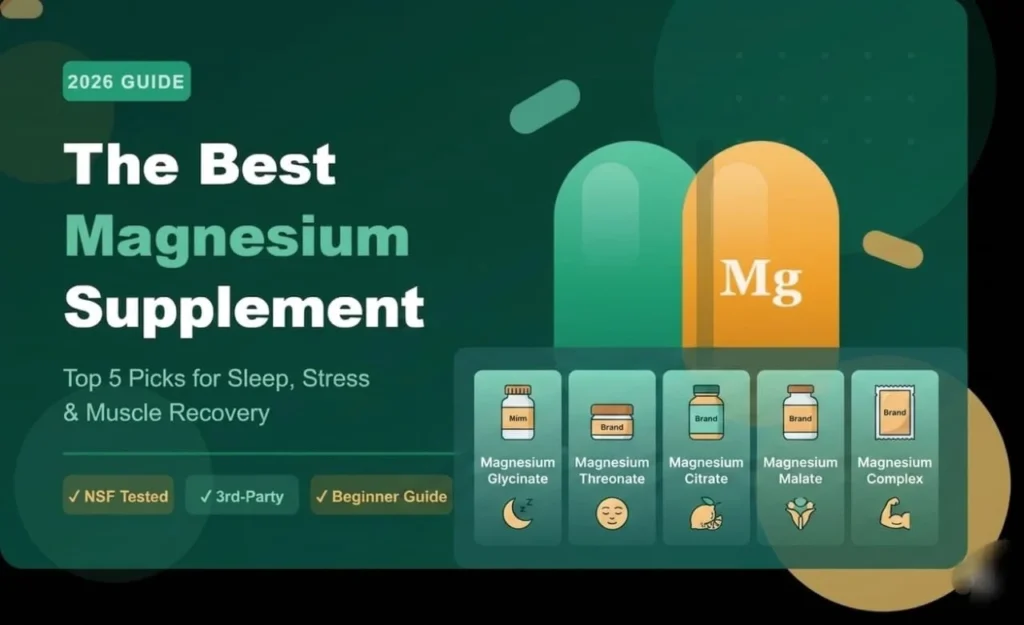
Magnesium Supplement Guide 2026: Stop Guessing, Start Feeling Better
Your Body Is Running Low on Magnesium — And You Probably Don’t Know It
Magnesium Supplement Here is something most doctors never tell you at your annual checkup.
That afternoon crash you feel at 3 PM? The nights where you lie awake with a racing mind? The muscle cramps that wake you up at 2 AM? These are not random. They are not “just stress.” And they are not simply a sign of getting older.
In many cases, they are signs that your body is running low on one of the most critical minerals it needs to function — magnesium.
Nearly 48% of Americans across all age groups take in less magnesium from food and beverages than their bodies actually require. And yet, most people have never once considered adding magnesium to their daily routine.
This guide changes that.
We are not going to overwhelm you with science jargon or a list of 20 products to sort through. Instead, we give you exactly what you need: a clear, honest breakdown of the 5 best magnesium supplements in 2026, built around your specific goal — whether that is deeper sleep, less stress, more energy, or stronger muscles.
Let us start with the one question that actually matters.
⚠️ Medical Disclaimer: This content is informational only. Always consult a qualified healthcare provider before adding any new supplement to your routine.
Why Most People Are Magnesium Deficient (And Never Find Out)
Magnesium is not a glamorous nutrient. It does not get the billboard treatment that vitamin C or collagen does. But without it, your body quietly starts to fall apart.
This mineral powers over 300 enzymatic reactions inside you every single day. It controls how your muscles contract and relax. It regulates your stress hormones. It signals your brain that it is time to sleep. It keeps your heart beating in rhythm and your bones holding their density.
And here is the troubling part: the earliest signs of low levels — loss of appetite, fatigue, and weakness — are almost identical to dozens of other conditions. Most people blame their diet, their sleep schedule, their age, or their workload. They never think to check their mineral status.
In 2026, an estimated 48 to 68% of U.S. adults fall short of optimal levels, driven by ultra-processed diets, chronic stress, and lifestyle habits that steadily drain their stores.
The fix is not complicated. A quality magnesium supplement — taken correctly and consistently — can close that gap in weeks. And once your levels stabilize, many people report sleeping deeper, feeling calmer, and recovering faster from exercise.
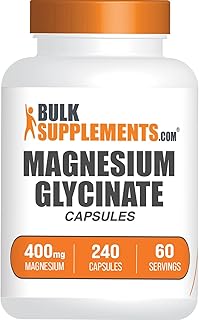
Magnesium Supplement, Highly Absorbed Form – Gluten Free, 4 Capsules per Serving (400mg), 240 Count (Pack of 1)
The 5 Forms of Magnesium: A Plain-English Breakdown
Walk into any pharmacy and you will see a shelf full of options. Glycinate. Citrate. Oxide. Malate. Threonate. The labels all look similar. The prices vary wildly. And most of them give you no real guidance on which one is right for you.
Here is the truth: the form of magnesium you take matters more than the brand.
Think of each form as a key. Your body has specific locks — specific health needs. The wrong key will not open the door, no matter how much of it you take.
Glycinate — The All-Rounder
Magnesium is bonded to glycine, an amino acid your brain actually uses to promote calm. This combination absorbs well, causes almost no stomach upset, and works gently on your nervous system. If you are new to taking magnesium, this is where you start. It is gentle, effective, and well-studied.
Best for: Sleep, anxiety, stress, everyday deficiency
The Citrate — The Fast Mover
Bonded with citric acid, this form dissolves easily and moves through your digestive system quickly. That speed is both its strength and its weakness. It works fast for digestive support, but high doses can send you running to the bathroom. Start low.
Best for: Constipation, digestion, budget supplementation
Malate — The Energy Form
Malic acid — found naturally in apples — bonds with this mineral to create a form that supports ATP production, which is how your cells make energy. Athletes and people who struggle with chronic fatigue often respond well to this one.
Best for: Muscle recovery, energy, fibromyalgia
Threonate — The Brain Form
This is the newest form on the list and the most expensive. Researchers developed it specifically to cross the blood-brain barrier — something no other form of magnesium can reliably do. If your primary concern is focus, memory, or cognitive aging, this is worth the premium.
Best for: Brain health, memory, focus, cognitive decline prevention
Oxide — The Cheap One (Skip It)
You will find this in most drugstore generics because it is cheap to manufacture. The problem is that your body absorbs very little of it — studies suggest an absorption rate as low as 4%. It can relieve constipation in a pinch, but as a daily option it is largely a waste of money.
Best for: Short-term constipation only
How We Chose These 5 Products
Every product on this list had to pass a strict six-point check before making the cut. We only include a magnesium supplement that scored well across all of these areas:
- Absorption quality — Does the form actually get into your bloodstream?
- Real elemental dose — How much actual magnesium are you getting per serving, not just per capsule?
- Independent lab testing — Has a third party verified purity and label accuracy?
- Formula cleanliness — Are there hidden fillers, artificial binders, or allergens?
- True cost per day — What does a full daily dose actually cost, normalized per serving?
- Manufacturer standards — Does the company follow cGMP (current Good Manufacturing Practice) guidelines?
Products that checked all six boxes made the list. Products that leaned on marketing but skipped testing did not.
The 5 Best Magnesium Supplements of 2026
1 — Pure Encapsulations Magnesium Glycinate
The Cleanest Formula on the Market
If you care about what is NOT in your supplement as much as what is, Pure Encapsulations wins without contest. This brand was built for practitioners — doctors, dietitians, and functional medicine providers who need to recommend something they can stand behind.
Every batch is third-party tested. The ingredient list is ruthlessly short. No rice flour. No magnesium stearate. No titanium dioxide. Just magnesium glycinate in a hypoallergenic capsule.
| Detail | Info |
|---|---|
| Form | Magnesium glycinate |
| Elemental magnesium | 120 mg per capsule |
| Third-party testing | NSF Certified |
| Allergen-free | Gluten, soy, dairy, GMO-free |
| Vegan | Yes |
What makes it stand out: Most people need 2 capsules per day to hit a therapeutic dose. At 240 mg total, you are in a meaningful range without pushing the upper limit.
Honest downside: It is one of the priciest options per bottle. But the cost-per-serving is reasonable when you account for the formula quality.
Who should buy this: Anyone with food sensitivities, anyone who wants the most trusted formula, anyone a doctor or dietitian has pointed toward a clean daily mineral supplement.
2 Nature Made Magnesium Glycinate
Best Value for Sleep Support
Nature Made does not try to be a premium brand. It tries to be a reliable, accessible, pharmacist-recommended option — and it nails that role better than almost anyone.
The USP Verified seal on the label is not just marketing. It means an independent organization physically tested the product for label accuracy, purity, and contaminant levels. That level of accountability is surprisingly rare even in well-known brands.
| Detail | Info |
|---|---|
| Form | Magnesium glycinate |
| Elemental magnesium | 200 mg per serving |
| Third-party testing | USP Verified |
| Allergen-free | No artificial colors or dyes |
| Vegan | No (gelatin capsule) |
What makes it stand out: 200 mg per serving is a solid starting dose. You get a real, meaningful amount of magnesium without needing to take multiple capsules.
Honest downside: The capsule shell is gelatin-based, which makes this unsuitable for vegans or vegetarians. There is also a small amount of rice flour used as a flow agent.
Who should buy this: Budget-conscious adults who want a verified, trustworthy pick specifically for improving sleep quality.
3 Mega Food Magnesium
Best Whole-Food Based Option
MegaFood takes a different philosophy than most supplement brands. Instead of isolating magnesium in a lab and compressing it into a capsule, they pair it with real food — in this case, organic spinach — to create a formula the body recognizes as food-sourced nutrition.
The result is a three-form magnesium blend (glycinate + citrate + malate) that covers sleep, digestion, and energy in a single serving.
| Detail | Info |
|---|---|
| Form | Glycinate + Citrate + Malate blend |
| Elemental magnesium | 300 mg per serving |
| Third-party testing | NSF Registered Facility |
| Allergen-free | Gluten, dairy, soy, GMO-free |
| Vegan | Yes (certified) |
What makes it stand out: 300 mg of elemental magnesium per serving is the highest dose on this list. For adults who are significantly deficient, this can produce noticeable results faster than lower-dose options.
Honest downside: The multi-form approach is brilliant in theory, but each form is present in smaller amounts than a single-form product. If you need a high dose of one specific form — say, threonate for cognition — this blend will not deliver it.
Who should buy this: Health-conscious adults who want a clean, food-based formula that covers multiple bases at once.
4 NOW Foods Magnesium Malate
Best for Active Adults and Muscle Recovery
NOW Foods has been in business for over 50 years. That longevity is not an accident — they consistently deliver pharmaceutical-grade quality at a price point that does not require a second mortgage.
Their magnesium malate is a standout for anyone who works out, experiences regular muscle soreness, or battles daytime fatigue. Malic acid helps drive energy production at the cellular level, which means this form of magnesium does double duty: it relaxes muscles AND helps fuel them.
| Detail | Info |
|---|---|
| Form | Magnesium malate |
| Elemental magnesium | 115 mg per tablet |
| Third-party testing | Informed Sport Certified |
| Allergen-free | Gluten, soy, GMO-free |
| Vegan | Yes |
What makes it stand out: At roughly $0.15–$0.20 per serving, this is the most affordable quality option on this list. The Informed Sport certification also makes it safe for competitive athletes.
Honest downside: Tablets take slightly longer to dissolve and absorb than capsules. A small number of users also report a mild earthy aftertaste.
Who should buy this: Gym-goers, runners, anyone with muscle fatigue or cramping, and budget-focused buyers who refuse to sacrifice quality.
5 Thorne Magnesium Bisglycinate
Best Premium Pick for Serious Buyers
Thorne is not a household name — and they are fine with that. Their products are stocked in sports medicine clinics, sold through naturopathic doctors, and used by Olympic athletes. They do not compete on price. They compete on science.
Magnesium bisglycinate is a chelated form of glycinate — meaning each magnesium atom is wrapped in two glycine molecules instead of one. This chelation process significantly improves absorption and dramatically reduces the chance of digestive side effects.
| Detail | Info |
|---|---|
| Form | Magnesium bisglycinate (chelated) |
| Elemental magnesium | 200 mg per serving |
| Third-party testing | NSF Certified for Sport |
| Allergen-free | Gluten, dairy, soy, additive-free |
| Vegan | Yes |
What makes it stand out: The NSF Certified for Sport seal is the most rigorous quality verification available for supplements. It signals that the product was tested not just for label accuracy but for over 270 substances banned in competitive sport.
Honest downside: This is the most expensive option per serving. It is also harder to find in physical stores — primarily available online or through healthcare practitioners.
Who should buy this: Anyone who wants the best formulation money can buy, including high-performance athletes, biohackers, and adults who have tried cheaper options without results.
Side-by-Side Comparison
| Brand | Form | Daily Dose | Certification | Cost/Day | Winner For |
|---|---|---|---|---|---|
| Pure Encapsulations | Glycinate | 240 mg | NSF | ~$0.50 | Cleanest formula |
| Nature Made | Glycinate | 200 mg | USP Verified | ~$0.25 | Best value |
| MegaFood | Glycinate/Citrate/Malate | 300 mg | NSF Facility | ~$0.58 | Whole food lovers |
| NOW Foods | Malate | 230 mg (2 tabs) | Informed Sport | ~$0.18 | Active adults |
| Thorne | Bisglycinate | 200 mg | NSF Sport | ~$0.80 | Premium quality |
Match Your Goal to Your Magnesium Supplement
You do not need to read five full product reviews to make a decision. Use this quick-reference guide instead:
You cannot fall asleep or stay asleep → Go with Nature Made Glycinate. The USP verification and 200 mg dose make it one of the most reliable sleep-support picks available at a mainstream price point.
You work out regularly and want faster recovery → Go with NOW Foods Malate. The malic acid component directly supports the energy production pathways that muscles depend on during and after exercise.
You have a sensitive stomach or multiple food allergies → Go with Pure Encapsulations. It is the most hypoallergenic formula on the list — made specifically for people who react to common supplement fillers.
You want one supplement that covers everything → Go with MegaFood. Three forms of magnesium plus whole-food nutrients in a single serving is hard to beat for breadth of benefit.
You want the absolute best regardless of cost → Go with Thorne Bisglycinate. The chelation, the certification, and the clinical-grade manufacturing standard justify the premium for serious buyers.
How much should you take each day?
The Recommended Daily Allowance (RDA) for magnesium from the National Institutes of Health is:
- Men aged 19–30: 400 mg
- Men aged 31+: 420 mg
- Women aged 19–30: 310 mg
- Women aged 31+: 320 mg
The tolerable upper intake level for supplemental magnesium is 350 mg per day. Start at the low end of your product’s recommended dose and increase gradually. Food sources do not count against this limit.
When should you take it?
Evening is typically best — specifically 30 to 60 minutes before bed. Magnesium’s muscle-relaxing and nervous-system-calming effects make it a natural fit for a pre-sleep routine. If it upsets your stomach, take it with your evening meal instead.
Warning Signs Your Levels Are Too Low
Most people dismiss these symptoms. Do not.
Early signs of deficiency include loss of appetite, nausea, fatigue, and muscle weakness. As levels drop further, symptoms can escalate to muscle cramps, numbness and tingling, irregular heartbeat, and personality changes.
Sound familiar? If two or more of these show up regularly, it is worth talking to your doctor about testing your levels — and worth starting a quality magnesium supplement in the meantime.
Low levels are also associated with a 50% higher risk of developing type 2 diabetes and a 30% higher risk of hypertension. These are not minor side effects — they are serious chronic conditions that a simple daily magnesium supplement may help reduce the risk of over time.
Side Effects: What to Expect (And What to Avoid)
A magnesium supplement is safe for the vast majority of healthy adults. However, there are a few things to keep in mind before you start:
The most common side effect is loose stools. This is more likely with citrate and oxide forms, and at higher doses. If this happens, reduce your dose and switch to glycinate or malate — both are gentler on the digestive tract.
Nausea can occur if taken on an empty stomach. Always take it with food if you have a sensitive stomach.
Who should check with a doctor first:
- Anyone with kidney disease — the kidneys regulate how this mineral is excreted
- Anyone taking diuretics, antibiotics, or diabetes medications — it can interact with these
- Pregnant or breastfeeding women
If you are otherwise healthy, starting at the recommended dose is low-risk and high-reward.
6 Questions People Actually Ask About Magnesium Supplements
Does a magnesium supplement really help with sleep?
Yes — and this is one of the most well-supported benefits in the research. A magnesium supplement regulates the neurotransmitter GABA, which signals the nervous system to slow down and prepare for sleep. Glycinate form is best for this purpose because it also supplies glycine, an amino acid that independently supports sleep quality.
How quickly will I notice a difference?
Most people begin to notice changes within 1 to 3 weeks of consistent daily use. Sleep improvements tend to come first. Muscle cramp reduction often follows. Mood and energy improvements may take 3 to 4 weeks to fully emerge.
Can I get enough magnesium from food alone?
In theory, yes. In practice, most adults fall short. Modern diets heavy in ultra-processed foods, combined with chronic stress and certain medications, deplete magnesium stores faster than most people replenish them. Leafy greens, pumpkin seeds, dark chocolate, almonds, and black beans are excellent food sources — but only if you eat them consistently and in adequate amounts. A magnesium supplement bridges that gap reliably.
Is it okay to take a magnesium supplement every day?
Yes. For healthy adults staying within the 350 mg daily limit, taking it consistently is safe for the long term. Many people do so year-round without issue.
What happens if I take too much magnesium?
Excess magnesium is usually excreted through urine. At very high doses, diarrhea is the first signal to reduce your intake. Serious toxicity is extremely rare in healthy adults but possible in people with impaired kidney function.
Which magnesium supplement is best for anxiety?
Magnesium glycinate is the most researched form for anxiety and stress. The glycine component has its own calming effect on the brain, making this magnesium supplement especially effective for nervous system support. Some research also points to magnesium threonate for mood-related benefits due to its ability to penetrate the brain.
The Bottom Line
Your body needs magnesium. Odds are high that it is not getting enough. And the good news is that fixing this is genuinely simple — a quality magnesium supplement taken daily, matched to your specific health goal, is one of the most affordable and effective upgrades you can make to your routine right now.
Here is our no-nonsense final recommendation:
- Most adults: Start with Nature Made Magnesium Glycinate — affordable, verified, reliable
- Sensitive stomachs or allergies: Choose Pure Encapsulations — the cleanest formula available
- Active adults and athletes: Go with NOW Foods Malate — the best value for muscle support
- Whole-health approach: Pick MegaFood — food-based, multi-form, full-spectrum
- No-compromise quality: Invest in Thorne Bisglycinate — practitioner-grade, maximum absorption
Still not sure which option fits your situation? The comparison table above matches each product to a specific goal. Find yours, click the link, and get started today.
Your sleep, your muscles, your energy, and your nervous system will feel the difference.
Last updated: June 2026. This article is reviewed periodically for accuracy. For personalized medical advice, consult your healthcare provider.